
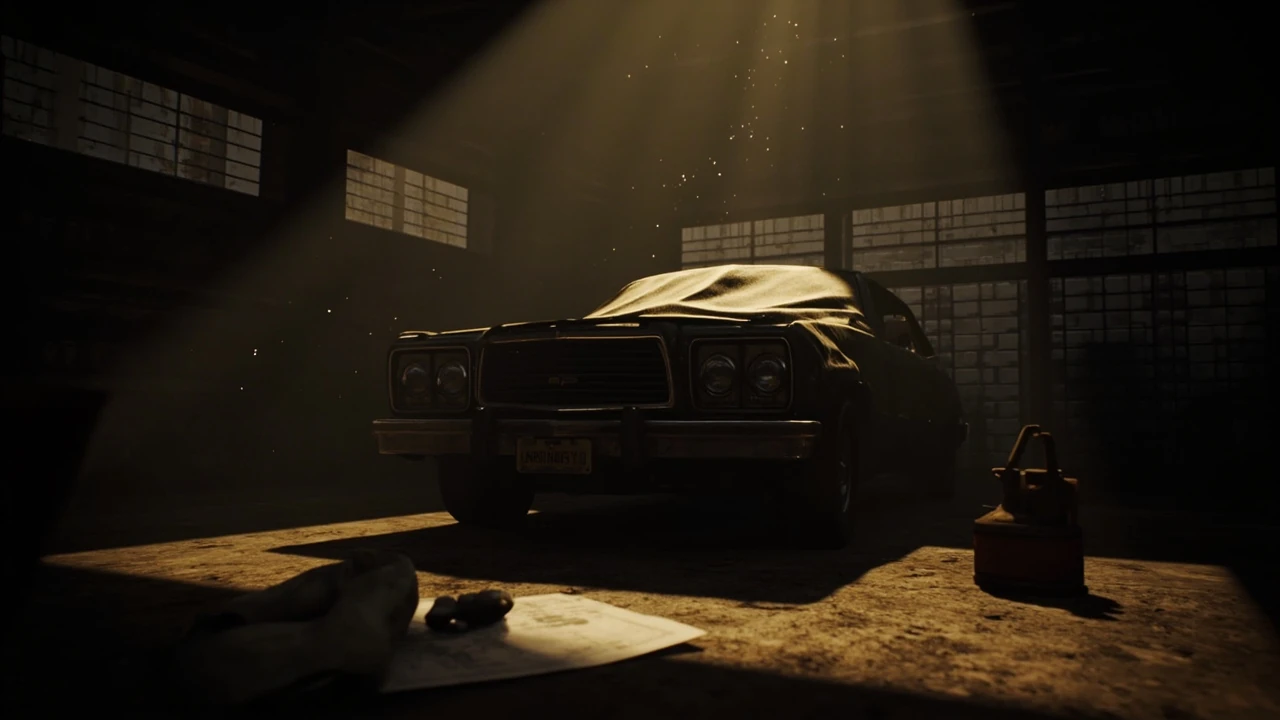
Forza Horizon 6 barn finds: how the hunt actually works
A barn find in the Forza Horizon series is a deliberately buried piece of car culture. It is a forgotten vehicle hidden in a structure, a mine, a container yard, or a flooded lot, waiting for a player to recognise the visual cue and trigger a recovery mission. Forza Horizon 6 continues that tradition, and the mechanic is one of the most searched systems in any new entry because the discovery loop is simple, the rewards are tangible, and the timing is unpredictable. Players want to know what changes between releases, how the spawn rules work, and how the system interacts with the broader campaign, difficulty settings, and seasonal updates.
This article focuses on how barn finds function as a design and player-experience system, drawing on the established pattern from earlier entries in the series and on the public framing used by the franchise. It is written for players who want to plan their route through the map, and for readers who are curious about the design decisions behind the loop. Where concrete details depend on official information that has not yet been published, the article says so directly instead of guessing.
What a barn find actually is in the series
Barn finds are not random loot drops. They are placed discoverable events tied to specific map coordinates, gated behind a recognition step. When a player drives near the location, the game usually broadcasts a short audio sting and shows a brief on-screen hint. The player then needs to find the entrance, often a partially blocked doorway, a hidden tunnel, a break in a wall, or an off-road path, and enter the structure to trigger the recovery sequence. Once the player inspects the car, it joins the garage and becomes eligible for restoration, tuning, and use in the campaign and online modes.
The mechanic has been part of Forza Horizon since the earliest entries and has become one of the franchise’s signature loops. The general structure of the series, including its open-world festival framing, is documented on the Forza Horizon series page, and the long-running community wiki at IGN’s Forza Horizon barn finds guide tracks how the discovery pattern has worked in prior releases. Players searching for Forza Horizon 6 barn finds usually want three things: a list of where to look, an explanation of how the spawn rules differ from earlier games, and confirmation that the rewards still matter in the new progression system.
How discovery normally works, step by step
Even before a confirmed patch list lands, the discovery loop follows a reliable pattern that carries over from earlier games with small adjustments per release. New players often assume the locations are marked, while returning players know that the marker only appears after the trigger fires.
- Drive or free-roam close to a designated sector of the map, usually off the main road network in valleys, industrial zones, or remote farmland.
- Listen and watch for a short audio cue and on-screen prompt, typically a brief musical sting or a notification that a barn find rumble has been triggered.
- Approach the visible structure, which usually blends into the environment through colour matching, foliage, or weather damage.
- Enter the building through whatever cover blocks the entrance, then interact with the car to begin the recovery cutscene.
- Wait for the restoration timer, or spend credits to fast-track the rebuild through the garage system.
The key design idea is that the player has to do a small amount of investigative work. The game does not hand the location over. This is intentional, because the discovery is the reward, and the car is the second reward. Forza Horizon 6 inherits that pattern, and the experience of searching for barn finds on a new map is one of the most replayable parts of the early campaign.
What changes from one Horizon release to the next
Although the loop stays the same, each release tweaks the surface. Common adjustments include new vehicle pools that match the setting, revised map density, and a different balance between fixed barns and rotating or seasonal barns. Some entries stagger the reveals so that not all barns are available at launch. Others tie specific barn finds to festival chapters, brand-new careers, or seasonal live events.
| Element | Common pattern in the series | Why it changes per release |
|---|---|---|
| Total barns at launch | Around 10 to 20 cars hidden across the map | Map size, vehicle list length, and live-ops season length |
| Trigger type | Proximity-based audio cue plus on-screen notification | UI clarity, accessibility options, and minimap behaviour |
| Reveal pacing | Some fixed, some unlocked by progression | Whether the campaign is chapter-based or open from the start |
| Restoration | Timed restoration, optional credit payment to skip | Economy tuning and difficulty expectations for the entry |
| Seasonal rotation | Some releases add barn finds during festival seasons | Live-ops design, retention goals, and DLC support plans |
Forza Horizon 6 sits inside that pattern. Without confirmed patch notes, players should expect a mix of fixed launch barns and a smaller rotating set added through the festival calendar. The exact split depends on how the developer positions the game’s live service, which is one of the areas where the developer usually publishes a roadmap within the first weeks of release.
Where barn finds usually sit on the map
Barn find designers tend to place vehicles in environments that match their character. A rally car shows up somewhere with dirt, a vintage GT shows up near an industrial estate, a Dakar-style off-roader shows up in a quarry, and a luxury coupe shows up in a dry climate area. The placement is not random, and recognising the visual language helps players search the map efficiently even when no marker is present.
The categories below cover the kinds of locations players should learn to read in any new Horizon release. The same logic carries over to Forza Horizon 6 barn finds, because the developers usually reuse the design language even when the specific coordinates change. More background on the series’ open-world structure is available on the Forza Horizon Wikipedia article, which documents how festival hubs and remote discoveries have been framed since the first entry.
- Agricultural and rural zones: barns, silos, and farm outbuildings are the obvious candidates, but fenced pastures, irrigation channels, and collapsed greenhouses also work as camouflage.
- Industrial and port zones: shipyards, container terminals, and disused rail yards host classics that fit a working-class or muscle-car identity.
- Forest and mountain zones: logging roads, mining tunnels, and old ski lodges provide cover for off-road builds and rally cars.
- Coastal and desert zones: dry lake beds, salt flats, and cliff-edge structures fit vintage record holders and pre-war vehicles.
- Urban edge zones: the seams between a city and its outskirts, including overgrown lots, old drive-ins, and small aerodromes, frequently hold tuner cars and cult classics.
Reading the environment is a transferable skill. Players who learned to think this way in earlier Horizon games will adapt quickly to the new map, and the same broad approach that worked in Forza Horizon 5 should also work in Forza Horizon 6, where the setting shifts but the placement logic usually follows the same rhythm.
How spawn rules have evolved across the series
Spawn rules are the part of the system that players argue about the most, because they determine whether a barn is available on day one or only after a specific milestone. Three patterns have been common in the series, and Forza Horizon 6 will most likely borrow from one of them or blend them.
Fixed spawns are the simplest. Every barn is on the map from the moment a player loads in, and the only requirement is proximity. Progression-gated spawns tie specific barns to chapters, story events, or a minimum accolade count. Seasonal spawns are the newest pattern: a handful of barns are reserved for festival seasons and only appear once a player has reached the relevant tier or playlist week.
| Spawn pattern | What the player sees | How it changes the hunt |
|---|---|---|
| Fixed | Audio cue fires as soon as the player drives within range | Easiest to plan for; the whole map can be cleared in a long session |
| Progression-gated | Cue is silent until the player meets a chapter or accolade requirement | Players who rush the story may miss late-game barns; players who explore widely may still find them later |
| Seasonal | Cue only fires during an active festival season that features the barn | Late joiners inherit previous seasons’ cars; current players have to check the playlist each week |
Forza Horizon 6 is expected to use a mix of fixed and seasonal barns, with the festival calendar controlling the rotating set. The exact split between fixed and rotating content is one of the things the developer usually clarifies in the first festival playlist, and players who want a clean early-game sweep should focus on the fixed barns first before tracking seasonal additions.
Difficulty, assists, and how settings change the hunt
Driving assists affect almost every moment-to-moment decision in Forza Horizon, and barn finds are no exception. The change is rarely about the trigger itself, which is usually a fixed event, and more about the recovery mission that follows in some entries. Even when the recovery is automatic, the player’s chosen difficulty profile shapes how easy it is to drive the restored car into the festival or back to a garage.
| Setting | Effect on the discovery moment | Effect on the post-recovery experience |
|---|---|---|
| Steering assists off | No direct change; trigger is event-based | Restored car behaves as tuned, demanding more from the player on the first drive |
| Traction control off | No direct change | Reward feels larger because the car demands real skill |
| Damage and simulation on | No direct change | Player has to drive carefully to avoid ruining a rare restoration during the first outing |
| Rewind on | No direct change | Recovery drive is forgiving, but the player cannot use rewind inside a barn-find cinematic |
| Drivatar difficulty high | No direct change | Restored car has to compete in harder races sooner, raising its effective value |
The takeaway for players is that the discovery moment is consistent across difficulty settings, but the value of the reward changes with the risk profile. A player running on simulation damage who lands a barn find in the first hour is effectively getting a higher-value unlock than a player who can rewind through every mistake. Forza Horizon 6 barn finds behave the same way: the cue is universal, but the experience after the cue depends on the difficulty preset the player has chosen.
How barn finds connect to progression
Barn finds are a vehicle-acquisition system, which means they sit on top of the broader progression economy that the festival, accolades, and wheelspin rewards feed into. The car is not just a collectible. It is a tool that opens up new event types, new rivals, and new chapter completions. The most useful way to think about barn finds in a new release is as a way to skip the early grind for one specific car, while also unlocking a piece of map lore that the game uses to justify the discovery.
Forza Horizon 6 has not published a complete list of which barn finds gate which accolades. Players looking for fast progression should expect the following general relationships, which mirror earlier entries.
- First barn of the release: usually tied to a chapter-completion bonus, an early wheelspin, or a starter accolade.
- Mid-game barns: often tied to brand-specific accolades, such as collecting every car from a particular manufacturer, or to specific event types like rally or drift.
- End-game barns: sometimes locked behind story milestones or season completions, and they tend to be the rarest or most iconic vehicles in the roster.
- Seasonal barns: introduced through the live-ops festival calendar and tied to that season’s reward track, often reappearing in later seasons for new players.
The exact gating depends on the campaign structure of the new entry, which the developer usually explains in the launch festival playlist and in the first patch notes. Until that documentation is published, the safe approach for players is to treat every barn find as a useful unlock rather than a quest target.
Common mistakes that slow down the hunt
Experienced players lose hours to barn finds when they break the discovery pattern. The mistakes are usually about impatience, map reading, or inventory management rather than driving skill. The community wiki tracking the series’ barn finds lists many of these patterns across releases, and Forza Horizon 6 barn finds are unlikely to change the underlying habits that cause them.
- Following the road network only. Barns are placed off the asphalt by design, so a player who never leaves the tarmac will miss a large share of them.
- Relying on the map marker. In most Horizon entries the marker only appears after the trigger fires, so a clean map does not mean a clean slate.
- Ignoring the audio cue. The series uses a distinctive sting for the proximity event, and a player who drives with the radio loud or the chat window open can miss it.
- Selling restored barns. The collector tag and accolade remain, but the resale value is low and the player loses access to a rare vehicle for future events.
- Ignoring seasonal barns. The festival calendar often introduces additional cars, and skipping a season is a more permanent loss than missing a launch barn.
These are habit-level mistakes rather than mechanical ones. A small change in approach, like lowering the radio for long drives or running a route that touches the map edges first, tends to recover more barns than any external guide.
Working with the festival and seasonal updates
The festival is the framing for almost every progression system in modern Horizon entries, and barn finds are no exception. The launch roster represents the base set, and the seasonal playlist is where additional finds usually appear. A new player who joins mid-season inherits the cars that have already rotated in, so the actual barn list grows with the player’s start date rather than with the global launch date.
This is one of the reasons players search for Forza Horizon 6 barn finds early in a season. The newest seasonal barn is usually the one with the clearest community discussion, the highest resale value, and the tightest tie to a current event. Working through the seasonal list in order is the most efficient way to keep the garage current without spending credits on the auction house.
Players who joined late in a previous entry will recognise the same trade-off: missing a launch barn is recoverable, but missing a seasonal barn tied to a limited reward track is harder to fix. The festival playlist is also where the developer tends to publish any catch-up goals for previous seasons, so checking the playlist after a new season starts is usually worth the time.
How to plan a search route for a fresh map
Without a confirmed location list, players fall back on a route plan that covers the most likely regions first. The shape of the route is more important than the specific waypoints. The general approach is to start at the map edges and work inward, because the most isolated environments tend to host the most remote barns, and the most urban environments tend to host the more accessible ones.
- Spend the first session clearing the outermost ring of the map, including any coastal, desert, or mountain edges, where the remotest barns usually sit.
- Use a fast cross-country car, ideally one with rally tyres, because most entrances are reached through dirt or broken pavement.
- Drop the radio volume and switch off the chat window so the discovery sting is easy to hear.
- Mark each successful find on a personal log so seasonal additions can be tracked separately.
- After the outer ring is clear, sweep the mid-map rural and industrial zones, which usually hold the second wave of finds.
- Save the urban and suburban edges for last, where the most accessible barns act as a confidence check before any new seasonal additions.
This is a transferable method rather than a guide to specific coordinates. It works in any Horizon release and adapts to whatever the Forza Horizon 6 map turns out to be, because the design language is consistent even when the geography is new. Players who want a more efficient sweep can also use a fast-travel loop between the festival and the outer ring, since the fast-travel points in recent entries usually sit close to the most likely barn regions.
What a barn find is actually worth in the economy
The value of a barn find is not just the auction price. Three numbers matter: the credit value of the car after restoration, the rarity tier of the vehicle, and the event eligibility that the car unlocks. A barn find that happens to be a brand-new model for the festival’s main event is worth more in practice than a barn find that fits a niche class with little event support.
Forza Horizon 6 barn finds will land in the same economy, which means the credit value of the restored car is only a small part of the practical reward. The bigger payoff is the car’s eligibility for specific championships, the collector accolade, and the seasonal events that reference the model. Players who plan their route around event eligibility rather than raw credit value usually end up with a stronger garage by the end of the first season.
It is also worth noting that barn finds occasionally unlock a unique livery, a forced-induction upgrade, or a specific tuning part in earlier entries. The developer has not confirmed whether Forza Horizon 6 will repeat any of those side rewards, but the pattern suggests that at least some barns will carry a small extra bonus on top of the car itself.
Why the system has survived for so long
It is worth pausing on why barn finds have stayed in the series. The mechanic combines three things that Forza Horizon does well: an open world that rewards curiosity, a discoverable event that respects player attention, and a tangible reward that changes how the rest of the game plays. Each of those is harder to design than it looks. The open world has to give enough visual variation that the player can spot anomalies, the discoverable event has to fire reliably without being intrusive, and the reward has to be both rare and useful.
The mechanic is also a low-friction way to onboard new players into exploration. The audio cue is forgiving, the recovery sequence is a set piece rather than a challenge, and the result is an immediate upgrade. That combination is what makes barn finds one of the most cited player-experience features in the franchise, and it is why Forza Horizon 6 barn finds will continue to be a popular search even before a complete location list exists.
Limitations and what is still unknown
Any guide to a not-yet-released or recently released system has to be honest about its limits. The exact list of barn finds, the specific gating rules, and the seasonal rotation schedule for Forza Horizon 6 depend on official information that the developer publishes through patch notes, the festival playlist, and the in-game accolade descriptions. Players searching for Forza Horizon 6 barn finds should treat any third-party list, including this article, as a framework rather than a complete map.
What can be said with confidence is that the design language described here has held across multiple entries, and that the discovery loop is unlikely to change drastically. What cannot be said, and what this article does not pretend to know, is the exact coordinate of every barn, the precise reward value of each car, or the timing of any seasonal addition. Those answers will come from the developer and from the festival playlist once the game is in players’ hands.
Frequently asked questions
How many barn finds are in Forza Horizon 6 at launch?
The developer has not published a confirmed launch count for Forza Horizon 6 barn finds. Earlier entries in the series launched with roughly 10 to 20 barns on the base map, and additional cars were added through the festival calendar in the months after release. Players should expect a similar pattern: a launch roster that covers most of the map, followed by smaller seasonal additions tied to the live-ops playlist. A confirmed list will arrive with the first official guide update once the game is in players’ hands.
Do barn finds respawn after a season ends?
Barn finds tied to a season usually become available to new players who join later, but they do not typically return as a repeatable event for the same account once the car is collected. The mechanic is a one-time vehicle acquisition, not a farming loop. The seasonal aspect affects which cars appear during a given festival, not whether the same player can collect the same car twice. Players who skip a season should look for catch-up mechanics in the festival playlist, which usually let late joiners unlock the previous season’s content through a small set of additional goals.
Can barn find cars be sold or are they account-bound?
Barn find cars in earlier Horizon entries were regular garage entries after restoration, which means they could be sold, auctioned, or stored like any other car. The trade-off is rarely worth it. Barn finds are usually rare or unusual vehicles that hold their value through event eligibility and collector accolades, and the auction price rarely matches the player’s eventual need for the car in a specific championship or seasonal event. The safer choice is to keep the car and tune it for the relevant discipline.
Does difficulty affect whether a barn find triggers?
The discovery event itself is independent of driving difficulty. Whether a player is on simulation damage, full assists, or any difficulty preset, the trigger fires when the player drives within the proximity range and the audio cue plays. The difficulty choice affects what happens after the recovery, particularly the first drive back to the festival or a garage, but it does not gate the discovery. Players should pick the difficulty that matches their preferred risk profile rather than adjusting it to chase barn finds.
What is the best car to use when hunting for barn finds?
A cross-country or rally car with strong off-road tyres is the most efficient choice, because most barn entrances sit off the tarmac and behind terrain features. A high-horsepower AWD build cuts travel time between candidates, and a forgiving suspension helps when the entrance path is rough. Players who already own a tuned rally car from the previous entry can usually bring it across once the Forza Horizon 6 car list and tuning economy are confirmed.
Do barn finds tie into the story or are they side content?
Barn finds are usually framed as side content with story texture, rather than as required story beats. The cinematic that plays when a player finds a barn gives the car a fictional owner, a reason for being stored, and a small piece of map lore, but the campaign can usually be completed without collecting every barn. The main progression benefit of barn finds is the vehicle itself and the accolades attached to specific cars, both of which support a faster and more flexible run through the festival and the online modes.
Are there missable barn finds in Forza Horizon 6?
Most barn finds remain on the map once the trigger has fired, and the car is not lost if the player ignores the recovery cinematic. The main risk of a missable barn is timing, because some entries gate specific finds behind a chapter or a seasonal milestone. The safest approach is to collect barns as they appear rather than to plan a clean sweep, because the developer can change the gating rules in a patch. Players who want a complete garage should clear each barn as soon as the audio cue fires and avoid assuming that the car will still be there after a long session.
How do barn finds interact with the festival playlist?
The festival playlist is the main live-ops vehicle in modern Horizon entries, and barn finds are part of the playlist’s reward structure in most seasons. A new season can introduce a fresh barn find, a refreshed set of seasonal events that reference an existing barn, or a small bonus for players who have already collected a specific car. The exact structure for Forza Horizon 6 will appear in the first festival playlist once the game launches, and the developer usually updates the playlist on a weekly or biweekly cadence.
What should a new player do first when looking for barn finds?
A new player should first clear the map edges, then sweep the mid-map rural and industrial zones, and only then visit the urban fringe. The order matters because the most remote barns are easy to miss on a clean map, while the most accessible ones often act as a quick early reward. A new player should also turn the radio down, keep the chat window closed while exploring, and avoid relying on community videos, which are usually recorded on patched versions of the map that may not match the live state.
Will the barn find list change after patches or DLC?
Yes. The base list is rarely the final list, and both patches and DLC packs have added barn finds in earlier entries. Players who want the most accurate list should check the official festival playlist and the patch notes, because the developer usually announces new barns alongside the seasonal events that unlock them. A community-maintained list is a useful shortcut, but it should be cross-referenced with the official channel whenever a new season starts.





Leave a Reply