
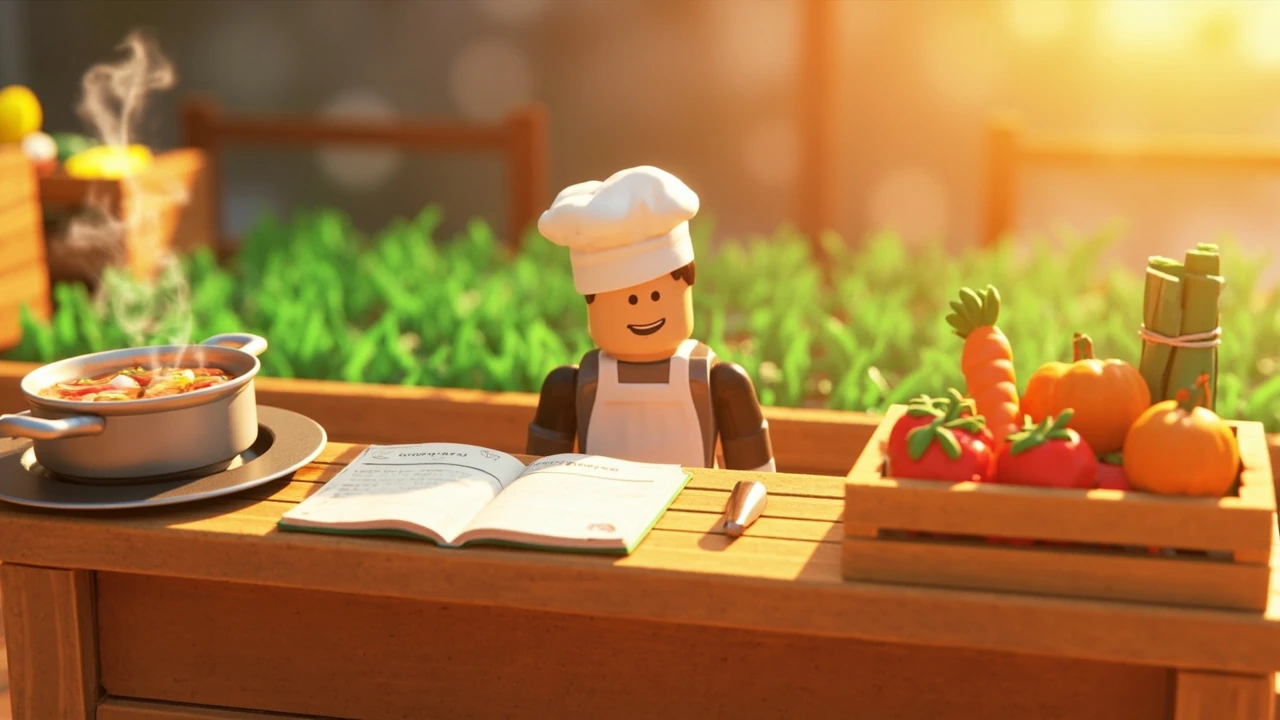
Grow a garden recipes: a practical cooking guide for Roblox chefs
The cooking system in Grow a Garden turns surplus crops into dishes that heal pets, fund upgrades, and unlock event rewards. Most new players treat the kitchen like an afterthought, dropping random ingredients into a pot and hoping for a result. The recipes that matter follow fixed ingredient lists, portion rules, and cook-time windows, and a single wrong seed can mean a rejected plate and a wasted batch of food. This guide explains how grow a garden recipes work, what to cook first, and which dishes are worth the seed bank when rare crops and event ingredients are in short supply.
You will find a tier table, a cooking workflow, an ingredient priority list, event-specific recipes, troubleshooting for burnt and rejected dishes, and a frequently asked questions section. Returning players and newcomers both run into the same wall: the recipe book is strict, the pot is unforgiving, and the right prep saves more time than any single dish does. Cook what the book actually asks for, follow the portion counts, and the kitchen becomes one of the most stable earners in the game.
How the cooking system works in Grow a Garden
The cooking station unlocks through the main progression path once your plot reaches a certain level. When you interact with the station, a recipe book opens and lists every dish the live build supports. Each entry shows the required ingredients, a rarity tier, the dish effect, and the cook time. A dish only counts as cooked when the pot contains the exact ingredient set; one wrong seed or one missing herb and the result is a rejected plate, which still consumes the ingredients and burns through the cook timer.
Recipes are not procedurally generated. The set is fixed and is expanded by the developer through patches and seasonal events. New dishes typically appear when a new crop type is added, when a limited event introduces themed ingredients, or when a balance pass changes the value of an existing plate. The recipe book reflects the current server version, so a friend on an older build may not see the same dishes you do. Always check the version stamp in the corner of the cooking UI before trading a recipe sheet or accepting a cook order from another player.
Cooking time scales with dish complexity. A basic soup needs a few seconds. A multi-ingredient pie or a themed event plate can run close to a minute. While a pot is active, you cannot start a second cook on the same station, and the ingredients stay locked in. If you walk away and the timer expires, the dish auto-completes into a finished plate that drops into the output slot. If the pot is interrupted by a server shutdown or a manual cancel, the ingredients are lost and the cook timer does not carry over.
One detail that catches new players off guard is how the pot reads the final ingredient set rather than the order of placement. You can drop a pumpkin in first and the herb last, and the dish still counts as a valid cook as long as the count matches. What the pot does not forgive is a miscount. Adding a second herb when the recipe only calls for one is treated as a different recipe, and the result is a rejected plate that still eats every ingredient you put in. Treat the pot like a strict weighing scale: the right number of the right items, nothing else.
Tier table: how recipes stack up
The table below compares the recipe tiers players encounter most often. Values reflect typical behavior during a normal live build and shift during events, so treat the numbers as a planning reference rather than a hard contract. Event windows often compress cook times and boost the sell value of higher tiers, which can flip the value calculation for a full session.
| Tier | Typical ingredient count | Approximate cook time | Primary use | Reliability for new players |
|---|---|---|---|---|
| Basic | 1 to 2 | Very short | Daily feeding, low-value sales | High |
| Standard | 2 to 3 | Short | Pet healing, small event progress | High when following the book |
| Advanced | 3 to 4 | Medium | Event currency, higher sell value | Medium; sensitive to portions |
| Rare | 4 to 5 | Long | Limited recipes, prestige crafts | Low; usually needs rare seeds |
| Event exclusive | 3 to 6 | Variable | Time-limited recipes tied to a season | Lowest; available only during the event |
Use the table as a decision aid. A rare dish that nets a strong payout still wastes time if you lack the seeds to repeat the cook. New players usually get the best return by completing every basic and standard recipe first, then pushing into advanced dishes once the seed bank is stable. The jump from standard to advanced is where most new kitchens stall, so the rest of this guide focuses on that transition.
One pattern worth pointing out is that the tier label and the actual ingredient count do not always move in lockstep. Some rare recipes sit at four ingredients and cook in a moderate window, while a few event exclusives are surprisingly light on ingredients but require seeds that almost no one has planted. A useful habit is to look at the cook time and the seed cost together, because a rare recipe with cheap ingredients is often the better cook than an event exclusive that asks for a stack of hard-to-grow crops.
The cooking workflow from seed to plate
Cooking in Grow a Garden follows the same five-step loop regardless of the dish. Skipping any step is the most common reason for a rejected plate, especially on advanced and rare tiers where one missing herb can void a cook that took ten minutes to assemble.
- Open the recipe book on the cooking station and confirm the dish you want to make, including the exact ingredients and the count of each.
- Gather the listed seeds, fruits, herbs, or special items from your plot, your storage chest, or a trade. Do not substitute unless the book explicitly says the ingredient is interchangeable.
- Place the ingredients into the pot in any order. The game reads the final set, not the sequence, but the order you place them affects how the in-progress cook looks for screenshots.
- Start the cook and stay on the station until the timer finishes. Moving away is allowed, but you risk the timer running out without a quick collect and may lose the dish if the server drops.
- Collect the plate from the output slot. The finished dish goes into your backpack or the chest, depending on your inventory rules, and the recipe is marked as discovered in your book.
The five-step loop looks simple, but the part that fails most often is step two. Players grab whatever is in the field without checking the recipe entry and end up with a single wrong item. A thirty-second check before you start saves several minutes of cook time and a stack of wasted ingredients, which is the difference between a profitable kitchen and one that bleeds seeds.
A second habit that pays off quickly is a short prep checklist before any long cook. Write the recipe name, the ingredient list, and the count of each item on a small notepad, then tick them off as you pull from the chest. It feels slow the first time you do it, and it becomes a thirty-second habit by the third cook. The reason it works is that the recipe book does not warn you when you are about to over-stuff the pot, and the warning only comes back as a rejected plate. A pre-cook checklist replaces that warning with a visible check, and it is the single biggest productivity gain a new cook can make in a single afternoon.
Ingredient priority list for steady cooking
Not every seed you plant is worth cooking. Some crops are best kept for sale, some for trade, and some for specific recipes that no other ingredient can replace. A simple priority order keeps the kitchen productive without starving the rest of the farm.
- Carrots, tomatoes, and corn: workhorse ingredients that appear in a high share of basic and standard recipes and also sell well when you have a surplus.
- Strawberries and blueberries: common advanced-recipe ingredients and a good source of moderate heal value, so cook them before the rarer fruits.
- Pumpkins and melons: larger, slower crops that unlock several advanced dishes, including the most popular pie recipes and a few seasonal stews.
- Herbs and spices: small but essential. The recipe book will not accept a dish that is missing a single herb, even if every other ingredient is correct.
- Event crops: hold these for the event-specific recipes unless the event is over, in which case they usually shift into standard dishes or vendor trash.
- Pet-preferred ingredients: if a recipe unlocks a pet boost, keep one of the listed crops in reserve for repeat cooks during the boost window.
Rotate the list as your seed bank grows. Mid-game players benefit from a balanced patch that includes a few herbs and one or two event crops. For additional context, End-game players usually keep a dedicated herb row to keep the kitchen supplied without touching their main sale fields, which is often what separates a working kitchen from a stalled one.
One common mistake is to treat herbs as a side crop. Herbs are the bottleneck in most kitchens because they are small, easy to overlook, and easy to forget to replant. A player who keeps four full rows of carrots but only a single herb plant will struggle to finish the standard recipe book, even with a stacked seed bank. Plant herbs on a tight cycle and harvest them as soon as they are ready, because a single missing herb is enough to fail an advanced cook and waste the larger crops that went into the same pot.
Recipe categories you will use most
The recipe book groups dishes by effect rather than by ingredient, which is the cleanest way to decide what to cook in any given moment. The four groups below cover around ninety percent of what a typical player will cook over a season.
Healing recipes
Healing dishes restore pet energy and minor player buffs. They are the first recipes most new players complete because the ingredients are common and the cook time is short. A basic veggie soup, a fruit salad, and a carrot stew cover the early healing needs without forcing you into a trade. Reserve the rarer healing dishes for when a pet is one meal away from evolving or a quest asks for a specific heal-tier plate. The trade board often prices rare healing dishes above their cook cost, so a kitchen that keeps a stock on hand can also turn a profit during a long pet-evolution session.
Sale-value recipes
Some dishes are worth more than the sum of their ingredients. These are the recipes you cook when you want to convert crops into currency without selling them raw. A baked pie typically beats selling the same fruit individually, and a stew can outperform a flat vegetable sale if the recipe is on a current bonus. The recipe book does not always show the sale bonus, so check the vendor or the trade board for the current price before committing a large ingredient set. Sale-value cooks are also the easiest way to burn through a surplus of one crop that the market has stopped rewarding.
Event recipes
Events add a temporary set of themed dishes that grant event currency, unique pets, or cosmetic items. These recipes are only available while the event runs, and the ingredients often come from limited seeds. The general rule is to cook event recipes as soon as you have the listed ingredients, even if the dish seems expensive, because the recipe window closes with the event. Any surplus event ingredients you cannot cook can be sold to other players, but the recipe is the better deal in most cases, and the gap widens when the event recipe is on a current bonus.
Pet and quest recipes
Some recipes are gated behind a pet tier or a quest step. They do not appear in the book until the prerequisite is met, and they remain visible only while the related quest is active. Mark the missing recipe on your checklist the first time you see the quest trigger so you do not have to re-learn the requirement later. Pet-locked recipes are worth prioritizing because the pet usually consumes the plate immediately, which means the ingredients never sit in your inventory and you can repeat the cook on the same server session.
Advanced cook comparison table
Players who have cleared every basic and standard recipe usually pick their next cook from a short list of advanced and rare dishes. The table below compares the ones that show up most often during a live season, with the kind of practical detail that helps you decide what to plant this week rather than next month.
| Dish example | Tier | Core ingredients | Cook time | Best use | Common failure |
|---|---|---|---|---|---|
| Veggie soup | Basic | Carrot, tomato, optional herb | Very short | Daily pet feeding | Using a pepper in place of a herb |
| Fruit salad | Standard | Strawberry, blueberry, optional sugar | Short | Small heal, low-cost sale | Substituting apple for blueberry |
| Pumpkin pie | Advanced | Pumpkin, sugar, flour, herb | Medium | High sell value, event currency | Skipping the herb garnish |
| Harvest stew | Advanced | Carrot, corn, pumpkin, herb | Medium | Pet boost, quest completion | Adding a fifth vegetable by mistake |
| Event cake | Event exclusive | Event flour, event sugar, fruit, herb, cocoa | Long | Event currency, unique pet unlock | Crafting after the event window closes |
The table is not a leaderboard. A fruit salad will outperform an event cake on a normal afternoon when the event recipe is off-bonus and the trade board is buying salad at a premium. Read the column that matters to your current goal, then commit a small test batch before scaling the cook.
Another detail the table does not show is the cook-to-sell ratio. The pumpkin pie usually beats the harvest stew on a flat market because the pie sells for a higher absolute price, while the harvest stew is better when the current pet-boost bonus is active because the stew feeds that bonus. The fruit salad is rarely the best cook, but it is the easiest cook to assemble during a busy server, and the lower margin is offset by the fact that the ingredients are common. Treat each row as a tradeoff between margin and ease of cooking, not as a ranking.
Common cooking mistakes and how to fix them
Cooking mistakes fall into a small number of patterns, and most of them are easy to fix once you see the cause. The list below covers the failures that show up in server chat and trade-board complaints every season.
- Wrong ingredient ratio: you put the right items in but added one extra, often because the pot still had a leftover from a previous cook. Empty the pot and the inventory filter before starting a new dish.
- Missing herb: a dish can look complete until the cook finishes, then return a rejected plate because a single herb was off by one. Always cross-check the recipe book’s icon list, not just the names.
- Burnt pot: leaving the cook too long past the timer sometimes burns the dish in busy servers. Set a sound alert or check the pot every fifteen seconds for long cooks.
- Version mismatch: a friend shared a recipe, but the dish does not appear in your book because the server is on a different patch. Wait for the next build or ask the friend to send the seed list instead of the finished plate.
- Cooking the wrong recipe: two dishes share a similar ingredient set, and you started the cheaper one by accident. Cancel if the game allows it, otherwise finish and note which recipe entry was the intended target next time.
- Wrong station level: the cooking station you walked up to is a lower tier than the recipe you want to cook. The book entry will gray out until you reach the matching station upgrade, and any attempt to start the cook is rejected without consuming ingredients.
If a recipe keeps failing after several clean attempts, the issue is almost always version-specific. The safest move is to cook a known-good dish, wait for the next server update, and re-test the failing recipe after the patch notes are published. Repeating the same cook on a stale build usually burns more seeds than it teaches you.
For additional context, One overlooked mistake is the habit of cooking with a full backpack. The pot draws from the last inventory the player opened, which means a cook started from a cooking chest with the right seeds can fail because the player’s backpack was still holding the wrong items. Empty the backpack, open the cooking chest, then start the cook. The three-step habit removes the most common “wrong ingredient” failure, and it is especially useful during long cooks where the cost of a single bad attempt is high.
Event timing and seasonal cooking
Recipes rotate with events more than any other system in the game. A spring event introduces fruit-forward dishes, a summer event leans toward pies and chilled plates, and a winter event brings warming recipes with cocoa, cinnamon, and limited herbs. Players who plan around the seasonal calendar usually get the best value from rare crops because the matching event recipe is live when the crop is harvestable. The kitchen therefore becomes a calendar tool as much as a crafting station.
The simplest planning rule is to plant one event crop row for every two rows of standard crops during an event window. That ratio keeps the kitchen supplied with both event ingredients and the basic recipes you still need for daily play. After the event ends, convert the remaining event ingredients into the best general recipe you can craft, or sell the surplus on the trade board before the market floods. Most players who lose money on event cooking are not losing it on the cook itself; they are losing it on the leftover ingredients they kept in storage past the event window.
For a broader view of how the cooking system fits into the wider game, the Grow a Garden overview on Wikipedia covers the developer’s design notes and the updates that have shaped the recipe system. Independent reporting on the title’s rise, including how a teenager-led Roblox project reached one of the platform’s biggest player counts, is collected in a Massively Overpowered feature on the title, which provides useful background on why the kitchen became such a central part of the loop.
A small calendar trick helps most players. Open the recipe book one day before the patch notes drop and write down the recipes you have not yet completed. When the new build lands, the next day usually shows a small overlap between the existing recipe list and the new event list, and the overlap is the best place to start. The reason is that the overlap recipes are usually priced at the old market rate for the first few hours, which gives early cooks a small edge over players who wait for the event to settle.
Trading, sharing, and the social side of recipes
Recipes themselves are account-bound once discovered, but the ingredients and the finished plates are tradable in most servers. That split matters. You cannot buy a recipe from another player, but you can buy the exact ingredient set if the seller is online and the ingredients are on the trade list. Players who run a kitchen service usually charge per cook plus a tip, with the price tied to the rarity of the dish and the current bonus window.
Sharing a recipe with a friend means walking them through the ingredient list, the cook time, and the discovery trigger. A common pattern is for one player to learn the recipe, broadcast the requirement in a server chat, and let the rest of the group farm the ingredients. The discoverer usually keeps the first plate as a thank-you fee, and the others sell or eat theirs. This pattern is also the fastest way to clear a limited recipe that requires ingredients most players have not yet planted, because the group’s combined seed bank clears the cook queue in a single session.
Trade etiquette is worth keeping in mind, because the kitchen is one of the few systems in the game where reputation compounds. A cook who delivers the right plate on the agreed price gets repeat orders, and a cook who slips a wrong dish quickly loses access to the better ingredient sellers. The simplest rule is to match the recipe book exactly and to finish the cook before the timer hits the grace window. The kitchen is small enough that word travels.
Another social pattern is the cook queue. Some groups will stack a shared cook list at the start of a session, then rotate through the cooking station while the rest of the group farms the next ingredient set. The cook queue is most useful for rare recipes that take several minutes each, because the group can keep the station busy for an hour without anyone having to babysit a single cook. The downside is that the cook queue requires trust, and a group that does not agree on the priority order can end up with a stack of rejected plates that no one wanted to cook in the first place.
Advanced cooking strategy
Once the basic recipes are completed, advanced players focus on three optimizations: ingredient caching, cook overlap, and event rotation. None of them require a new recipe book; they require a better workflow on the recipes you already have.
- Ingredient caching: keep a small stock of every herb and spice in your chest, refilled from your dedicated herb row, so the kitchen is never blocked on a missing garnish.
- Cook overlap: run two stations if your plot layout supports it. One handles long rare cooks while the other churns out short basic plates, so you always have a finished dish ready.
- Event rotation: track the event calendar and pre-plant the seeds the next event recipe list is rumored to use. Confirm against the official recipe book as soon as the patch lands, then prioritize the cook queue.
- Price checks: scan the trade board before committing a long cook. A ten-second check often moves a dish from break-even to profitable when the market is in motion.
- Inventory rules: set the chest to receive finished plates automatically for rare cooks, so a full backpack never eats a long cook’s reward.
The best cooks treat the kitchen as a production line rather than a side activity. The difference shows up in event currency earned per hour, which is the cleanest benchmark for whether the strategy is paying off. A kitchen that runs two stations, a stocked herb row, and an event rotation will clear most players’ cook backlogs in a single session, while a kitchen that opens the book once a week will always feel behind the recipe updates.
One last strategy worth naming is the test batch. Before committing a full set of rare ingredients to a long cook, run a smaller cook with a similar recipe at a lower tier. The smaller cook uses cheaper ingredients, follows the same workflow, and exposes the same workflow mistakes. If the test cook succeeds, scale the real cook. If it fails, you have lost a few common ingredients instead of a stack of rare seeds, and the failure teaches you the same lesson.
Storage, inventory, and long cooks
Long cooks and rare recipes raise a storage problem that basic cooking does not. A standard soup fits in any backpack, but a stack of event cakes can fill a chest row by the end of a session. The kitchen works best when storage is set up before the first long cook, not after the first overflow. Keep the finished-plate output slot connected to a chest with auto-receive, and keep a small overflow chest near the cooking station for the rare plates you do not want to sell immediately. The five-minute setup is what lets a long cook session run for an hour without forcing you to babysit the output slot.
Inventory rules also matter for the cook itself. The pot draws from the chest or backpack that the player opened last, which means a cook started from a chest with the right seeds can fail because the player’s backpack held the wrong items. The fix is to keep a dedicated cooking chest that only carries the seeds and herbs you actually use, and to open that chest immediately before starting a long cook. The pattern removes the most common “wrong ingredient” failure and turns the kitchen into a predictable earner.
For very long cooks, the chest layout matters more than the chest count. Place the cooking chest directly behind the station, place the overflow chest next to it, and place the sale chest one step further. The three-chest pattern lets you move finished plates in a single click during a long cook session, and it keeps the cook’s view of the pot free of clutter. The pattern is small, but it compounds: a kitchen with a clean three-chest layout can clear a long cook queue faster than a kitchen with a single mega-chest, even if both kitchens have the same total storage space.
Frequently asked questions
Where do I find the cooking station?
The cooking station unlocks through the main progression path after your plot reaches the required level. Once unlocked, it sits in a fixed location near the central hub on most maps, and a teleport icon marks it on the mini-map. Some events also place a temporary station inside the event area, which only works during the event window.
Can I cook without a recipe book entry?
No. The book entry is the source of truth. A dish only counts as a valid cook when the pot matches an entry the book already lists. Placing ingredients without a matching entry produces a rejected plate and consumes the ingredients, so always open the book and confirm the entry before loading the pot.
Why does my finished dish disappear?
The most common reason is a full inventory. The finished plate goes to the output slot, and if your backpack is full it is sometimes pushed to the chest. On rare occasions, a server reset can clear the output slot before you collect. Move the plate to a safe slot quickly when you finish a long cook, and keep auto-receive on for the cook chest.
Are event recipes worth the ingredient cost?
Usually yes. Event recipes are the most efficient way to earn event currency, and many of them unlock pets or cosmetics that do not return after the event ends. The cost is high, so plan your harvest around the event window instead of buying the ingredients at peak price. The early hours of an event usually offer the best margins.
Can I cook while offline?
No. Cooking requires an active station on a live server. If the game supports an offline reward, it usually applies to crop growth and not to the kitchen. Plan to do your cooking during your normal play session, and avoid leaving a long cook running if you know you will log off before the timer ends.
What happens if I cancel a cook mid-way?
The cancel option, when available, removes the pot contents and returns the ingredients. The cook timer does not reset for the same dish, so you can start a new plate immediately. Some server versions disable cancel for rare dishes to prevent abuse, and a server shutdown at the same moment can still consume the ingredients.
Do recipe bonuses stack?
Bonuses from different dishes generally do not stack. A pet can hold one food buff at a time, and the strongest buff usually wins. Check the pet panel before applying a second dish to avoid wasting a rare plate on a buff that will be overwritten a minute later.
How do I get rare recipe ingredients?
Rare ingredients come from rare seeds, which in turn come from higher-tier seed packs, event rewards, and trades. The fastest path is to combine an event grind with a few targeted trades. Plan the trade around the recipe list you want to cook, not the other way around, and avoid buying at peak when the market settles later in the day.
Is cooking profitable compared to selling raw crops?
For most standard and advanced recipes, yes. The break-even point depends on the current vendor and trade prices, so re-check the market before a long cook session. Event recipes almost always beat raw sales during the active window, while some basic recipes are flat at best and should be reserved for daily pet feeding rather than for sale.
How often does the recipe book update?
The recipe book updates with each major patch and at the start of every event. Minor patches may rebalance existing recipes without adding new entries, so watch the patch notes whenever a new build drops. Recipe book updates are also the most reliable signal that a new crop type has been added, since the matching dish usually lands in the same patch.




Leave a Reply